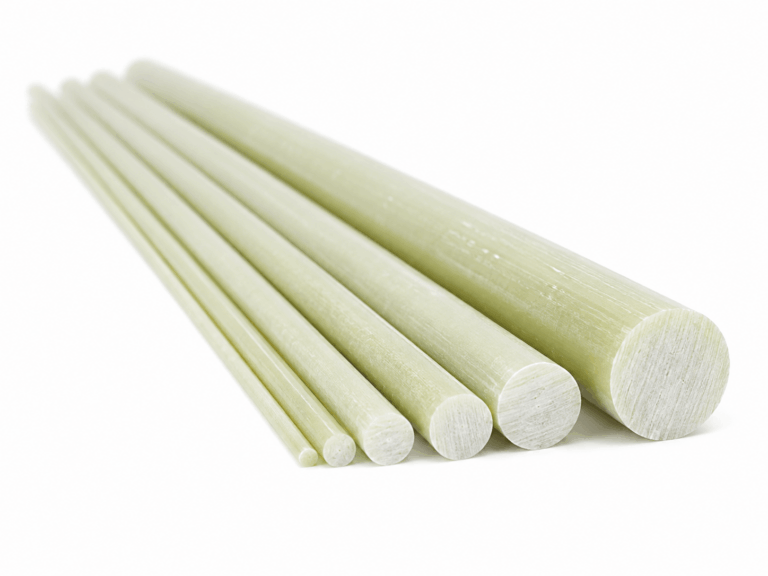
Glass Fiber Composite (GFRP) Rods
NitPro Composites manufactures high-performance glass fiber reinforced polymer (GFRP) rods engineered as a lightweight, corrosion-proof alternative to steel rods and rebar. As a trusted glass fiber rods manufacturer, we produce pultruded glass fiber rods for construction, infrastructure, marine, agricultural, and UAV applications where strength, durability, and non-conductivity matter most.
Also known as fiberglass rebar, FRP rods, or composite reinforcement bars, our fiberglass rods for construction are trusted across industries that demand consistent, long-term performance where traditional steel falls short.
Why Choose NitPro Composites GFRP Rods?
Our high strength glass fiber rods are built to outperform steel across the metrics that matter most on-site and over a structure's lifetime:
High Tensile Strength
Up to 4x higher strength-to-weight ratio than mild steel rods
Corrosion-Resistant GFRP Rods
Immune to rust, chlorides, and chemical degradation, ideal for marine and coastal concrete structures
Non-Conductive Fiberglass Rods
Non-magnetic and electrically inert, suited for MRI rooms, substations, and electrically sensitive environments
Lightweight Glass Fiber Composite Rods
Roughly 1/4 the weight of steel, reducing transport and installation costs

Dimensional Stability
Low thermal expansion and high fatigue resistance

Long Service Life
50+ year design life with minimal maintenance
Applications
NitPro Composites supplies GFRP rods across a wide range of industries and use cases:
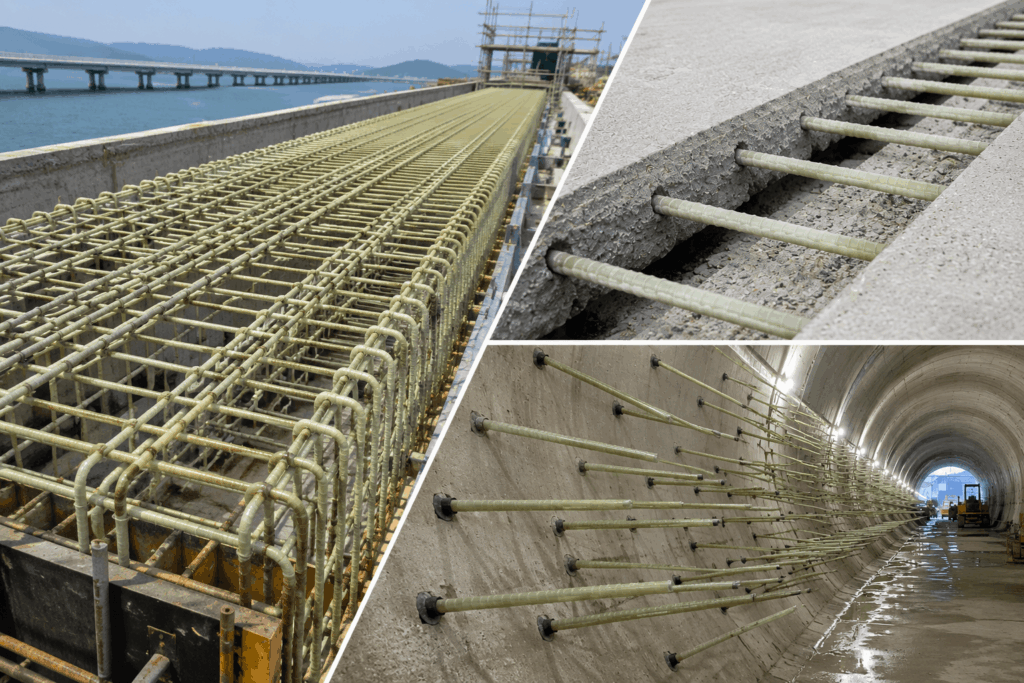
Construction & Infrastructure
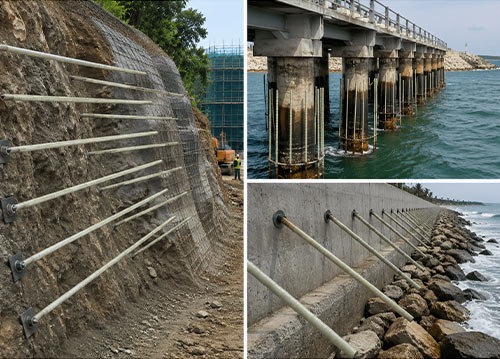
- GFRP rebar for concrete reinforcement in bridges, seawalls, and marine structures
- GFRP dowel bars for pavement joints
- GFRP rods for tunnel construction
Geotechnical & Marine
- GFRP rods for soil nailing and ground anchor systems
- GFRP rods for marine construction and coastal infrastructure
- GFRP rods for corrosive environments where steel degrades rapidly
Electrical & Industrial
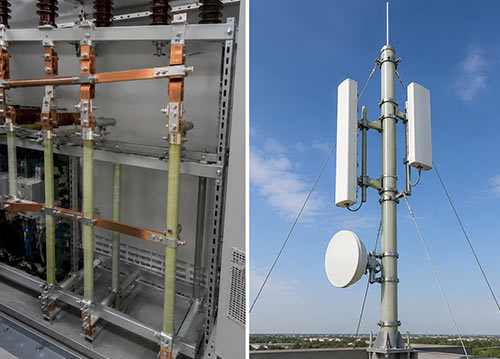
- GFRP rods for electrical insulation and busbar supports
- Glass fiber rods for antenna masts
Specialty & Emerging Applications
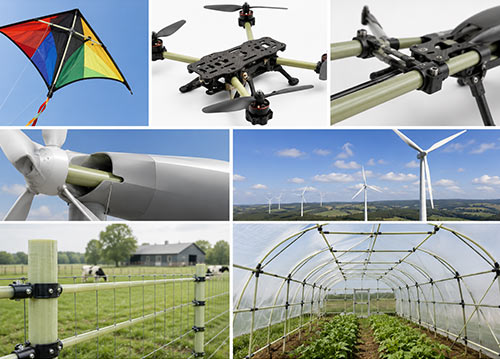
- Fiberglass rods for kite and drone frames
- GFRP rods for UAV manufacturers requiring non-conductive, high-strength-to-weight structural components
- Glass fiber rods for wind turbine components
- Fiberglass rods for agriculture fencing and greenhouse frames
GFRP Rods vs. Steel Rebar
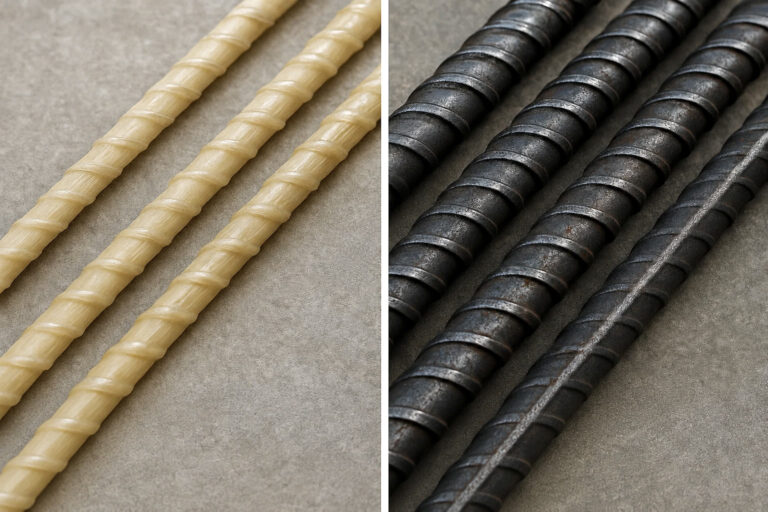
Choosing between GFRP rods vs steel rebar comes down to long-term performance. GFRP rods offer a higher tensile strength-to-weight ratio, while steel retains a higher elastic modulus but in corrosive or coastal environments, GFRP rods win on lifecycle value: they never rust, which reduces structural degradation and long-term maintenance costs. When evaluated on GFRP rebar cost vs steel, the higher upfront material cost is typically offset by decades of reduced maintenance, positioning GFRP as the best rebar alternative for coastal construction.
For projects weighing glass fiber rods vs carbon fiber rods, GFRP remains the more cost-effective, non-conductive choice ideal for concrete reinforcement, electrical insulation, and geotechnical applications where carbon fiber’s added stiffness isn’t required.
GFRP Rod Technical Specifications
| Property | Typical Value |
|---|---|
| Tensile Strength | 700–1,200 MPa |
| Elastic Modulus | 40–55 GPa |
| Density | 1.9–2.1 g/cm³ |
| Diameter Range | 4 mm – 32 mm |
| Water Absorption | <0.25% |
Custom diameter GFRP rods are available on request, along with sand-coated, ribbed, and helically wrapped surface finishes for improved concrete bonding.
Sourcing GFRP Rods from NitPro Composites
Whether you’re specifying material for a single project or sourcing at scale, working with an established glass fiber rod manufacturer for construction industry applications ensures consistent tensile performance, accurate diameter tolerances, and reliable surface treatment for bonding. Buyers looking for GFRP rods wholesale price options or OEM glass fiber composite rods built to custom specifications should prioritize manufacturers who can document tensile strength, elastic modulus, and water absorption data for every production batch- the specifications that ultimately determine long-term performance in the field.
From coastal seawalls to drone frames, GFRP rods have proven themselves as one of the most adaptable composite materials available today, combining the strength engineers need with the corrosion resistance and non-conductivity that steel simply can’t match.
Frequently Asked Questions
What is a GFRP rod used for?
GFRP rods are used as corrosion-resistant reinforcement in concrete, ground anchors, electrical insulation, and structural supports replacing steel wherever rust resistance, non-conductivity, or light weight is critical.
Are GFRP rods stronger than steel rebar?
GFRP rods offer a higher tensile strength-to-weight ratio than steel rebar, though steel has a higher elastic modulus. In corrosive environments, GFRP rods outperform steel long-term since they never rust.
Can GFRP rods be bent on-site?
Standard GFRP rods cannot be field-bent since curing is permanent. NitPro Composites offers custom pre-bent GFRP rebar manufactured to match your specific structural or reinforcement design requirements.
How long do GFRP rods last?
GFRP rods typically have a design service life exceeding 50–100 years due to their resistance to corrosion, chemicals, and moisture, ideal for bridges, seawalls, and other low-maintenance infrastructure.
Is GFRP rod electrically conductive?
No. GFRP rods are electrically non-conductive and non-magnetic, making them the preferred choice for MRI facilities, power substations, railway tracks, and other electromagnetically sensitive environments.
What sizes do GFRP reinforcement rods come in?
NitPro Composites manufactures GFRP rods from 4mm to 32mm in diameter, with custom lengths up to 12 meters or more, and sand-coated, ribbed, or helically wrapped surface finishes for improved bonding.