
Carbon Fiber Sheets
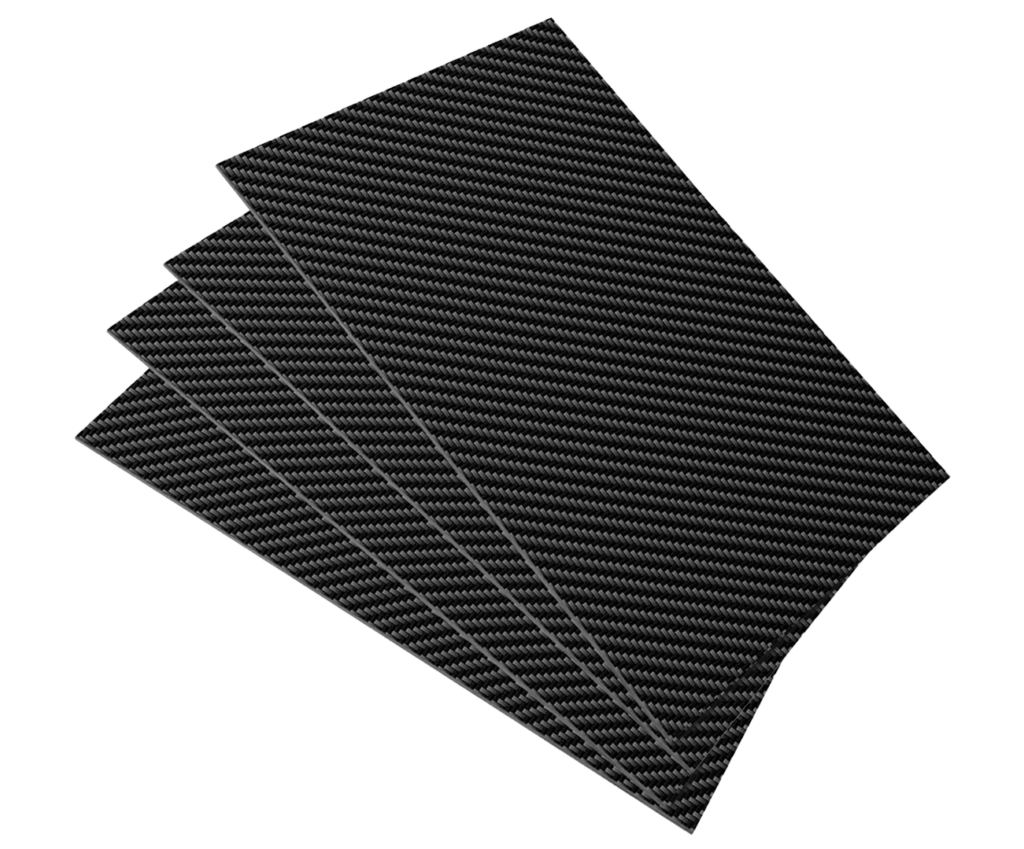
Carbon fiber composite sheets are produced by compression molding method as well as vacuum infusion using carbon fiber fabric with epoxy resin, carbon fiber prepreg.
In the process of compression molding, carbon fiber prepreg placed into mold, now the prepreg gets heated under pressure into mold with large hydraulic presses. Sheet gets cured as per curing cycle in varying dimensions.
The Vacuum Infusion method uses vacuum pressure to inject resin into a laminate. Dry carbon fiber layers are laid into the mold and the vacuum is applied before resin is infused. Once a complete vacuum is achieved, resin is literally sucked into the carbon fiber layers.
We deliver uncompromising quality and craftsmanship. Our carbon fiber sheets are consistent in quality with a superior glossy surface finish. Sheets are available in various thicknesses. Depending on the application, the sheet stiffness can be engineered using different carbon fiber l
Key Features
- Exceptionally rigid
- Stable dimension and UV resistant
- High Corrosion Resistance
- High Thermal Conductivity in some forms
- Low coefficient of thermal expansion
- Ideal building material for frames, trusses, and for use as reinforcing material.
Material Specifications
| Parameter | Value | Unit |
|---|---|---|
| Thickness | 0.25 - 30 | mm |
| Fiber orientation | Customized | — |
| Fiber type | 3k standard modulus Carbon fiber | — |
| Surface finish | Glossy | — |
| Density | 1.5 | gm/cc |
FAQ
What are carbon fiber sheets made of?
Carbon fiber composite sheets are manufactured using carbon fiber fabric, epoxy resin, and carbon fiber prepreg materials to ensure high strength and durability.
What manufacturing methods are used for carbon fiber sheets?
We manufacture carbon fiber sheets using:
- Compression Molding Method
- Vacuum Infusion Method
Both processes ensure high-quality performance and precision.
How does the compression molding process work?
In compression molding, carbon fiber prepreg is placed into a mold and heated under pressure using hydraulic presses. The sheets are then cured according to a specific curing cycle to achieve the required dimensions and strength.
What is the vacuum infusion process?
The vacuum infusion method uses vacuum pressure to draw resin into dry carbon fiber layers placed inside a mold. Once a complete vacuum is achieved, the resin is infused evenly throughout the laminate for superior strength and finish.
What sizes and specifications are available?
Our carbon fiber sheets are available in thicknesses ranging from 0.25 mm to 30 mm. Fiber orientation can also be customized based on application requirements.